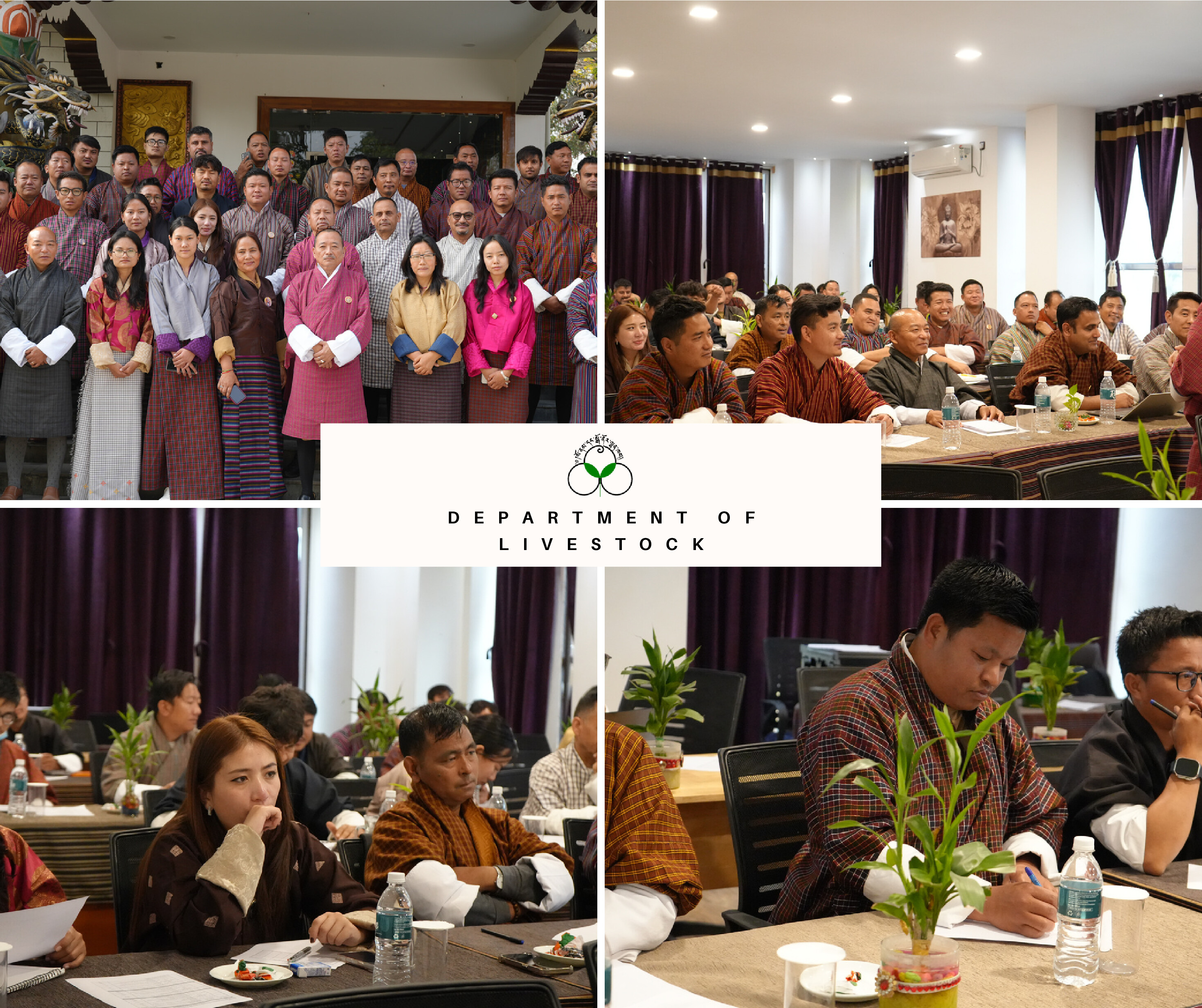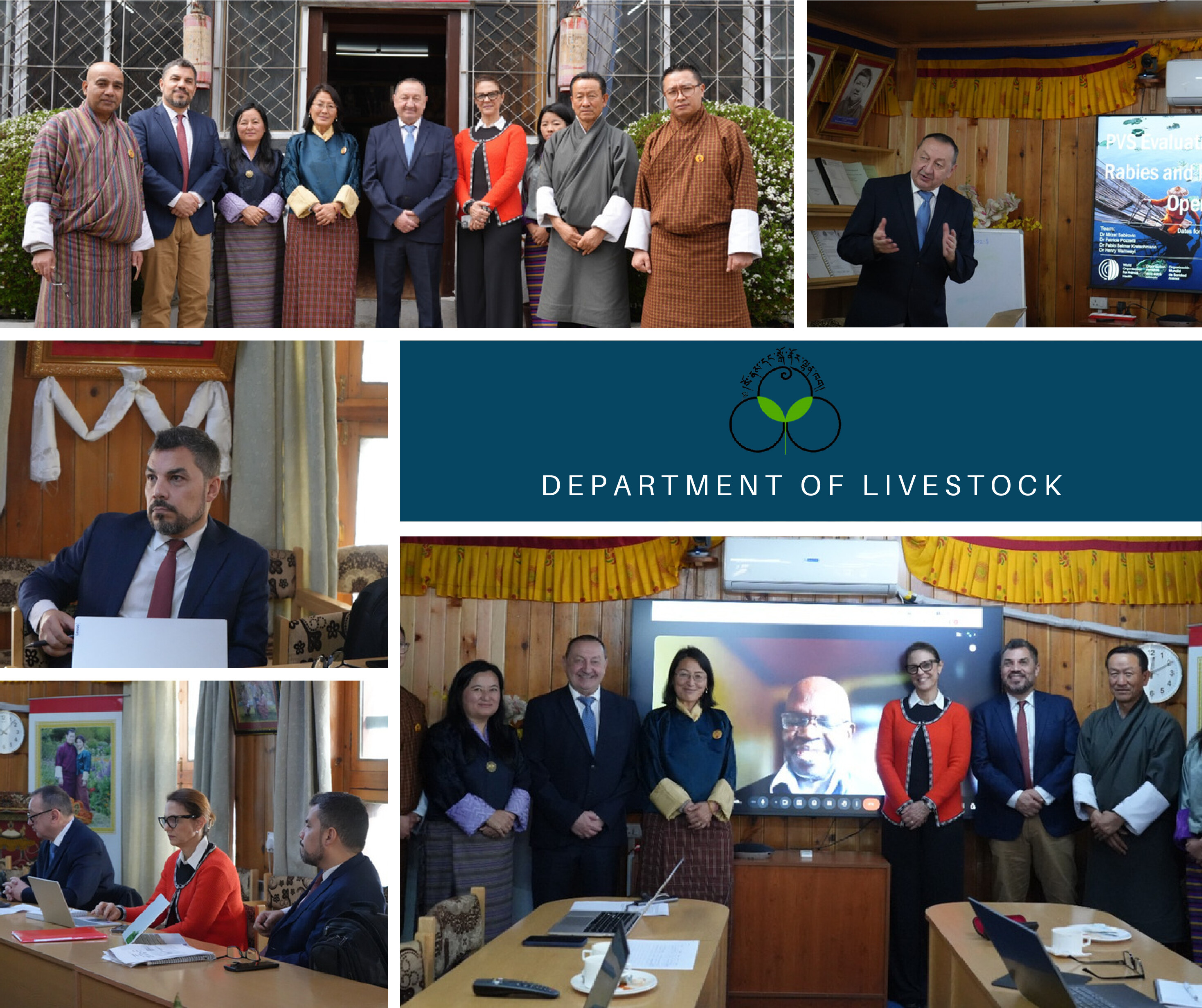
The Department of Livestock, Ministry of Agriculture and Livestock, welcomed the mission team from the World Organisation for Animal Health (WOAH) for the Performance of Veterinary Services (PVS) Follow up Evaluation Mission. This mission, which also includes Rabies and Peste des Petits Ruminants (PPR) specific content, is being conducted in Bhutan from 9 to 20 March 2026.
The PVS Pathway is a globally recognized and voluntary framework that supports countries in strengthening their Veterinary Services through a comprehensive and objective assessment aligned with WOAH international standards. The mission aims to review the progress made since the previous PVS Evaluation Follow up Mission conducted in 2015 and to identify further opportunities to strengthen national Veterinary Services.
On the first day of the mission, the WOAH PVS mission team held discussions with the Director General and officials of the Department of Livestock Headquarters in the morning. The meeting provided an opportunity to introduce the objectives of the mission, discuss the current status of Veterinary Services in the country, and exchange views on key achievements, challenges, and future priorities in the animal health sector. In the afternoon, the mission team met with officials from the Bhutan Food and Drug Authority (BFDA) Headquarters to discuss matters related to food safety, feed safety, regulation of veterinary medicines and vaccines, animal quarantine and border biosecurity, and veterinary public health.
The ongoing mission will assess the national Veterinary Services across a range of critical competencies, including human, physical and financial resources, technical authority and capability, interaction with stakeholders, and access to markets. The findings of the mission will provide valuable recommendations to guide the continued strengthening of Veterinary Services in the country and support national efforts to safeguard animal health, public health, and livelihoods dependent on livestock.
The Department of Livestock expresses its appreciation to WOAH for its continued support and technical collaboration in advancing the quality and effectiveness of Veterinary Services in the country.
Ministry of Agriculture and Livestock, Royal Government of Bhutan
World Organisation for Animal Health