Category: News

𝐃𝐚𝐬𝐡𝐨 𝐒𝐞𝐜𝐫𝐞𝐭𝐚𝐫𝐲’𝐬 (𝐌𝐨𝐀𝐋) 𝐯𝐢𝐬𝐢𝐭 𝐭𝐨 𝐧𝐞𝐰 𝐍𝐚𝐭𝐢𝐯𝐞 𝐏𝐢𝐠 𝐚𝐧𝐝 𝐓𝐮𝐫𝐤𝐞𝐲 𝐅𝐚𝐫𝐦

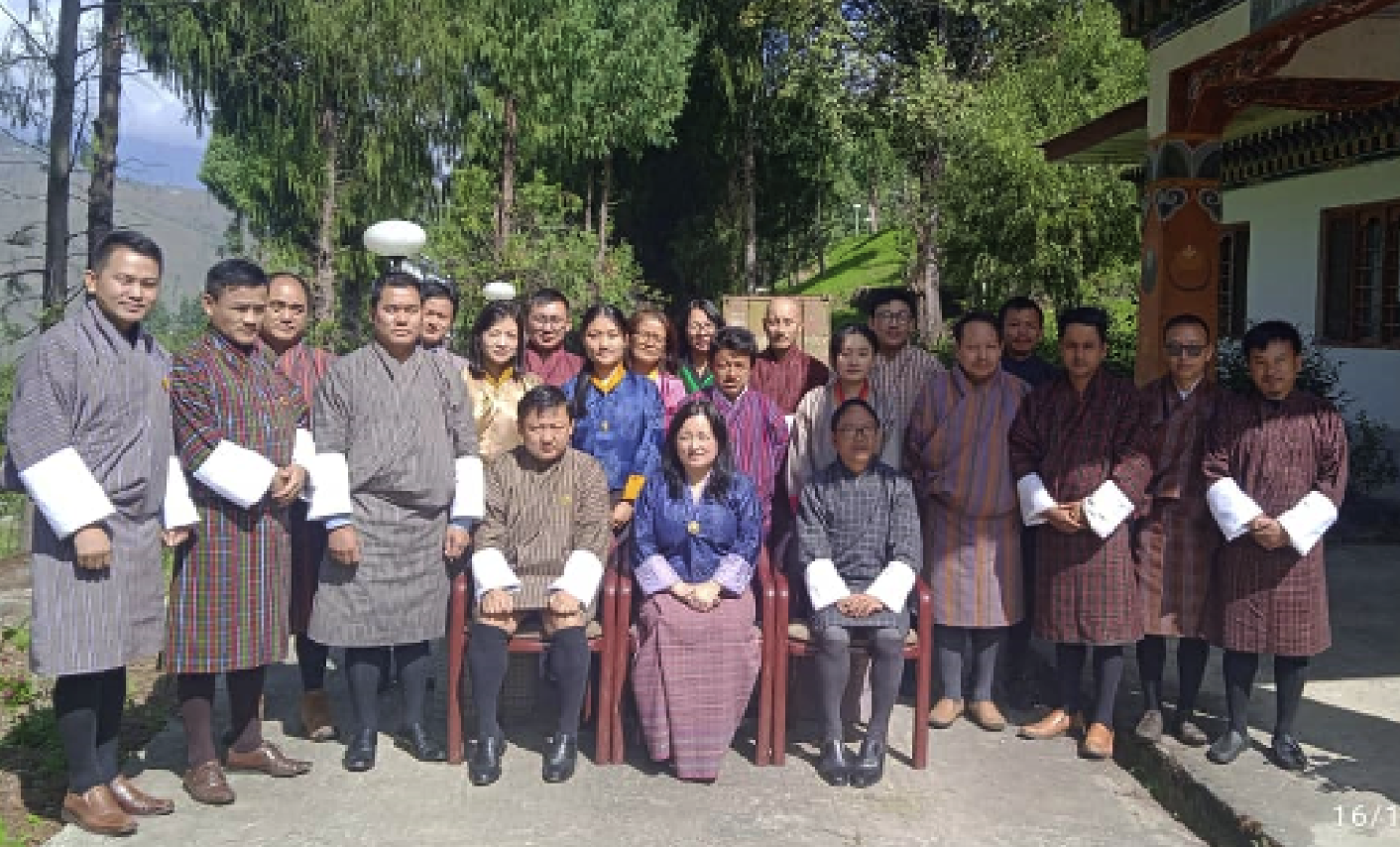
𝐎𝐜𝐭𝐨𝐛𝐞𝐫 𝟏𝟐, 𝟐𝟎𝟐𝟑: Dasho Secretary accompanied by a team from the Department of Livestock visited the Native Pig and Turkey relocation farm at Ramtoktok today. During the visit, Dasho provided valuable recommendations and conducted a thorough assessment of the capital works which were funded by the European Union (EU) as part of its initiative to promote an inclusive, sustainable, and resilient agri-food system in the country.
𝐁𝐚𝐜𝐤𝐠𝐫𝐨𝐮𝐧𝐝 𝐨𝐧 𝐄𝐬𝐭𝐚𝐛𝐥𝐢𝐬𝐡𝐦𝐞𝐧𝐭 𝐨𝐟 𝐍𝐮𝐜𝐥𝐞𝐮𝐬 𝐍𝐚𝐭𝐢𝐯𝐞 𝐏𝐢𝐠 𝐅𝐚𝐫𝐦
Native pig farming, once prevalent in many rural communities in the past and persisting to the present day in few locations, has largely remained at a subsistence level and is at risk of extinction in specific regions. Despite the substantial advantages and potential for the development of native pig breeds, the program to promote these breeds received less emphasis with the increased import and introduction of exotic pig breeds into the country. In comparison to exotic breeds, native pig breeds demonstrate superior adaptability, require less intensive management, possess hardiness, and display resistance to diseases. Notably, a comprehensive on-farm breeding trial conducted in the past by the present management of National Nucleus Pig Breeding Centre indicated that, under optimal management conditions encompassing feeding, housing, and sanitation, the overall performance of indigenous pigs was reasonably comparable to that of exotic breeds.
Therefore, there is a need to exert substantial effort to safeguard, promote, and sustainably utilize native pig resources by extending adequate policy support. Presently, sporadic conservation initiatives, both in situ and ex situ, are being pursued at farmers’ fields; however, these efforts need reinforcement. The establishment of functional native pig nucleus farm at Ramtoktok is crucial to address the considerable decline in the native pig population in the country, ensuring a sustainable native pig genetic resources for both development and conservation purposes.

Loading

𝐑𝐞𝐟𝐥𝐞𝐜𝐭𝐢𝐧𝐠 𝐨𝐧 𝐭𝐡𝐞 𝐀𝐜𝐡𝐢𝐞𝐯𝐞𝐦𝐞𝐧𝐭𝐬 𝐨𝐟 𝐭𝐡𝐞 𝟏𝟐𝐭𝐡 𝐅𝐢𝐯𝐞-𝐘𝐞𝐚𝐫 𝐏𝐥𝐚𝐧 𝐮𝐧𝐝𝐞𝐫 𝐭𝐡𝐞 𝐃𝐞𝐩𝐚𝐫𝐭𝐦𝐞𝐧𝐭 𝐨𝐟 𝐋𝐢𝐯𝐞𝐬𝐭𝐨𝐜𝐤

𝐀𝐜𝐭𝐢𝐯𝐢𝐭𝐲 𝟓. 𝐔𝐩𝐬𝐜𝐚𝐥𝐢𝐧𝐠 𝐜𝐨𝐧𝐭𝐫𝐚𝐜𝐭 𝐟𝐨𝐝𝐝𝐞𝐫 𝐬𝐞𝐞𝐝 𝐩𝐫𝐨𝐝𝐮𝐜𝐭𝐢𝐨𝐧 𝐩𝐫𝐨𝐠𝐫𝐚𝐦 𝐟𝐨𝐫 𝐞𝐜𝐨𝐧𝐨𝐦𝐢𝐜 𝐛𝐞𝐧𝐞𝐟𝐢𝐭 𝐨𝐟 𝐭𝐡𝐞 𝐫𝐮𝐫𝐚𝐥 𝐟𝐚𝐫𝐦𝐢𝐧𝐠 𝐜𝐨𝐦𝐦𝐮𝐧𝐢𝐭𝐲 𝐢𝐧 𝐁𝐡𝐮𝐭𝐚𝐧
𝐑𝐞𝐩𝐨𝐫𝐭𝐞𝐝 𝐛𝐲:
Mr. Wangchuk, Offtg. Program Director, National Development Centre for Animal Nutrition, Bumthang
𝐈𝐧𝐭𝐫𝐨𝐝𝐮𝐜𝐭𝐢𝐨𝐧
Bhutan is an agrarian country with agriculture & livestock sector engaging about 48.49% of the total population (NSB, 2022). Livestock rearing is considered as one of the most important economic activities providing supplementary as well as stable income for the rural community round the year (FAO 2021). The increasing trend of livestock population demands for parallel increase in feeding resources. Availability of adequate fodder resources is one of the most important elements for sustainable dairy farming. In the 12th FYP, the National Development Center for Animal Nutrition, Bumthang initiated one of the important activities on upscaling of fodder seed production through strengthening contract fodder seed production program. Around 700 farmers were engaged in fodder seed production activity. Increasing productivity of feed and fodder resources is directly proportional to quality seed supply to the farmers.
𝐀𝐜𝐭𝐢𝐯𝐢𝐭𝐢𝐞𝐬 𝐈𝐦𝐩𝐥𝐞𝐦𝐞𝐧𝐭𝐞𝐝
In 12th FYP, NDCAN, Bumthang facilitated the production, processing and supply of 128.38 MT of perennial fodder seed and 900 MT of annual or winter fodder seed (Oat and Fodder maize). The fodder seeds were supplied based on demand received from the Dzongkhags and Center/ Farms. The center also supplied 31.46 MT of Tall Fescue seed for lawn grass development to various Government and Private entities in the country.
𝐈𝐦𝐩𝐚𝐜𝐭
Upon successful upscaling of contract fodder seed production program, the demand for adequate fodder seeds supply could be met in the Dzongkhags for improved pasture and winter fodder development activities. This program has contributed towards increasing forage production to sustain dairy farming ventures in the 12th FYP. Another major beneficial impact observed was earning of cash income for contract fodder seed producing farmers through sale of fodder seeds. Through contract fodder seed program, around 700 farmers were directly employed generating an approximate cash income amounting Nu. 58.17 million in 12th FYP. On average an individual farmer had made an approximate income around Nu 83,100 through sale of fodder seeds. The extra income earned from engaging in contract fodder seed programs for rural farmers have helped them to improve their livelihood in addition to meeting the forage demand for their dairy cattle through utilization of fodder resources derived from fodder seed production activity.

Loading