The World Bank supported RNR Jobs Project under the Dairy Component is supporting the Department of Livestock in implementing strategic capacity building initiatives aimed at strengthening cattle breeding services and enhancing rural livelihood opportunities in the country. One of the key interventions under the project is the expansion of 𝐀𝐫𝐭𝐢𝐟𝐢𝐜𝐢𝐚𝐥 𝐈𝐧𝐬𝐞𝐦𝐢𝐧𝐚𝐭𝐢𝐨𝐧 (𝐀𝐈) 𝐬𝐞𝐫𝐯𝐢𝐜𝐞𝐬 𝐭𝐡𝐫𝐨𝐮𝐠𝐡 𝐭𝐡𝐞 𝐝𝐞𝐯𝐞𝐥𝐨𝐩𝐦𝐞𝐧𝐭 𝐨𝐟 𝐂𝐨𝐦𝐦𝐮𝐧𝐢𝐭𝐲 𝐁𝐚𝐬𝐞𝐝 𝐀𝐫𝐭𝐢𝐟𝐢𝐜𝐢𝐚𝐥 𝐈𝐧𝐬𝐞𝐦𝐢𝐧𝐚𝐭𝐢𝐨𝐧 𝐓𝐞𝐜𝐡𝐧𝐢𝐜𝐢𝐚𝐧𝐬 (𝐂𝐀𝐈𝐓). Artificial insemination is widely recognized as an effective reproductive technology that accelerates genetic improvement in cattle, improves milk productivity, and enhances the economic returns from dairying. Strengthening access to AI services is therefore a critical strategy for improving dairy sector performance and supporting rural income generation. This initiative is also closely aligned with the priorities of Department’s 13th Five Year Plan for the livestock sector, which emphasizes improving livestock productivity, strengthening decentralized service delivery, and creating sustainable income opportunities for rural communities.
Currently, 𝐭𝐡𝐞 𝐜𝐨𝐮𝐧𝐭𝐫𝐲 𝐨𝐩𝐞𝐫𝐚𝐭𝐞𝐬 𝐦𝐨𝐫𝐞 𝐭𝐡𝐚𝐧 𝟏𝟑𝟎 𝐀𝐫𝐭𝐢𝐟𝐢𝐜𝐢𝐚𝐥 𝐈𝐧𝐬𝐞𝐦𝐢𝐧𝐚𝐭𝐢𝐨𝐧 𝐂𝐞𝐧𝐭𝐫𝐞𝐬 𝐚𝐜𝐫𝐨𝐬𝐬 𝐚𝐥𝐥 𝐭𝐰𝐞𝐧𝐭𝐲 𝐃𝐳𝐨𝐧𝐠𝐤𝐡𝐚𝐠𝐬. These centres are managed by livestock supervisors who are responsible for delivering a broad range of services at the gewog level including animal health care, feed and fodder development, climate smart livestock practices, livestock production support, and farmer extension services. While this integrated approach ensures comprehensive livestock support, the wide range of responsibilities often makes it difficult for a single staff to provide uninterrupted and timely artificial insemination services to farmers. In recognition of this operational challenge, the Community Based Artificial Insemination Technician initiative was introduced by the National Dairy Development Centre to complement the existing government service delivery system and strengthen last mile service delivery to farmers.
The CAIT approach focuses on building technical capacity within communities by training interested local individuals to provide basic artificial insemination services within their respective areas. This decentralized model significantly improves accessibility to breeding services, reduces service delivery gaps, and ensures timely response to farmers’ needs. At the same time, it promotes community participation in livestock development while creating new livelihood opportunities for rural youth and farmers who can earn income by providing these services within their communities. By strengthening local human capacity and expanding breeding services, the programme contributes directly to the broader objectives of the 13th Five Year Plan to increase milk production, improve cattle genetics, and enhance the profitability of dairy farming.
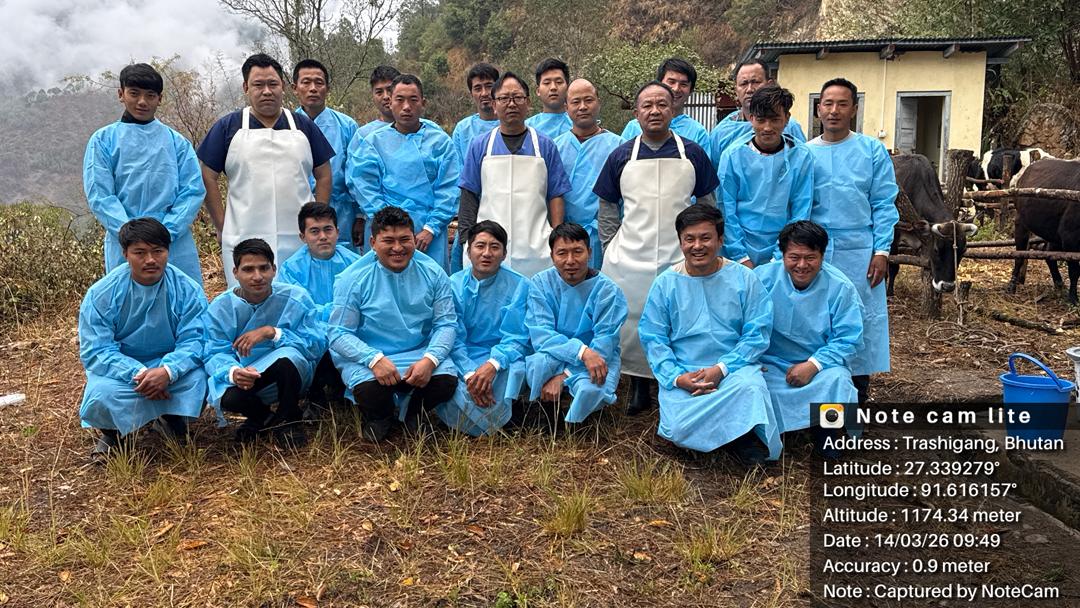
As part of the implementation of the RNR Jobs Project, a 28 day CAIT training programme commenced on 9 March 2026 at Bikhar in Samkhar Gewog under Trashigang Dzongkhag. The training is being organized by the National Dairy Development Centre, Yusipang in collaboration with the Regional Livestock Development Centre, Kanglung and the Dzongkhag Livestock Sector of Trashigang. A total of eighteen participants from eastern Dzongkhags are currently attending the programme, including participants from Samdrup Jongkhar, Trashigang, Lhuentse, Mongar and Trashi Yangtse. The training provides both theoretical knowledge and practical hands on skills in bovine artificial insemination, reproductive management, and field level cattle breeding services so that participants can effectively support farmers in their respective communities.
Through this intervention, the World Bank supported RNR Jobs Project is directly contributing to strengthening livestock service delivery systems while simultaneously creating skilled employment opportunities in rural areas. By investing in human capacity and community based service models, the project supports improved cattle genetics, higher dairy productivity, and increased income opportunities for farming households. The initiative therefore complements the broader development agenda of the Department of Livestock under the 13th Five Year Plan by supporting productivity enhancement, strengthening service delivery systems, and promoting sustainable rural employment through the livestock sector.